Understanding laryngectomy
A closer look at the parts of your neck involved in the operation, and what the changes mean for speaking, breathing, smell and swallowing.

The parts of your neck
These are the words your care team will use when they explain the operation. Switch between the two diagrams to see what changes.
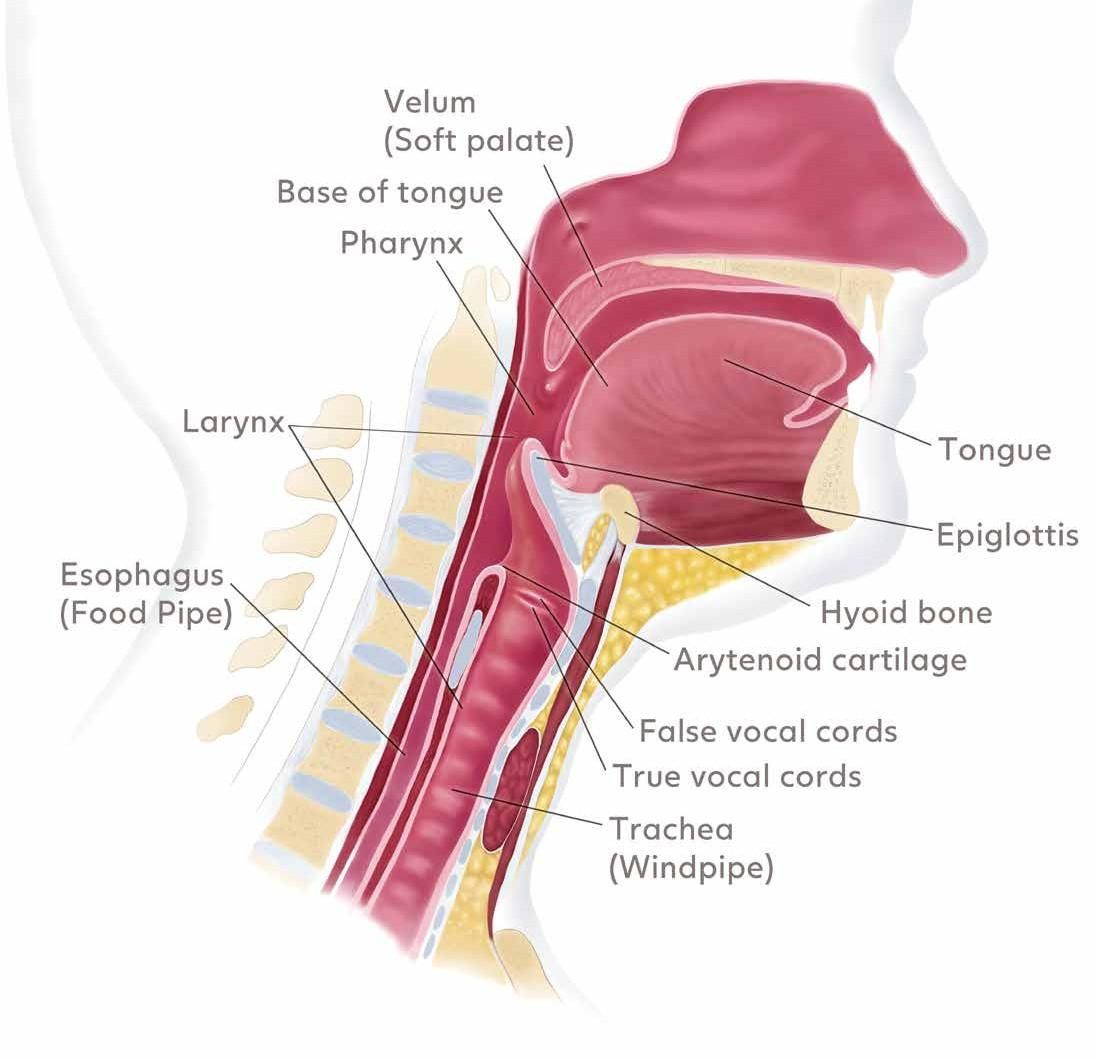
Before surgery. The larynx sits on top of the windpipe. Air flows in through your nose and mouth, past the vocal cords and down to your lungs.
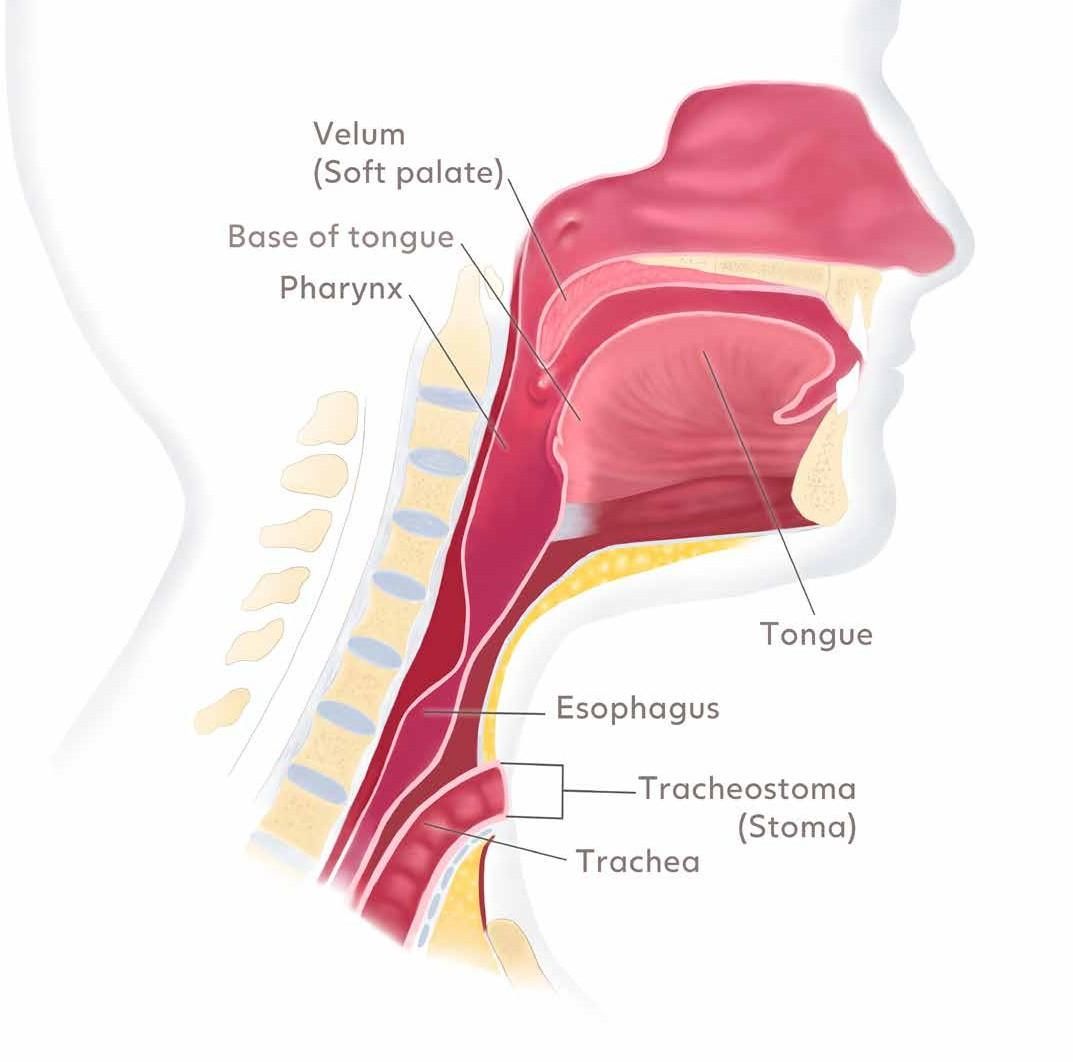
After surgery. The larynx and epiglottis are gone. The windpipe ends at the stoma, and the food pipe is completely separate from it.
- Larynx
- The voice box. It sits on top of the windpipe and holds the vocal cords, which vibrate to make the sound of your voice. It is removed in a total laryngectomy.
- Epiglottis
- A flap that covers your airway when you swallow, so food goes the right way. It is removed with the larynx.
- Pharynx
- The throat. A muscular tube that connects your mouth and nose to the food pipe.
- Esophagus
- The food pipe. It runs from your throat to your stomach.
- Trachea
- The windpipe. It runs from below the larynx to the top of your lungs.
- Stoma
- The permanent opening at the base of your neck that you breathe through after surgery.
What changes, and what helps
Your voice
Without vocal cords you cannot speak the way you did before. There are three proven ways to speak again, and your speech therapist will help you learn.
Your breathing
Air now enters your lungs without passing through your nose, so it arrives cooler, drier and unfiltered. A small device called an HME does the work your nose used to do.
Smell and taste
Because air no longer flows through your nose, smell and taste can fade. A simple technique can bring much of them back.
Swallowing
Food can no longer go down the wrong way, but swallowing may feel different. A few habits at mealtimes make it easier.
You are not alone
Hundreds of thousands of people around the world are living with a laryngectomy. Thousands of them can tell you, in their own voices, that life does go on. It may take time to adjust, but most people get back to work, family, travel and the things they love.
Good to know. The first laryngectomy was performed in Vienna, Austria, in 1873. Ever since, doctors and patients have worked on better ways to speak and breathe afterwards, and the options today are far better than they once were.